
Record 2,000+ BYD Vehicles Arrive in Karachi: What This Historic Shipment Means for Pakistan's EV Market
Over 2,000 BYD new energy vehicles (NEVs) have been offloaded at Karachi Port after arriving on a roll-on/roll-off (RoRo) vessel - the biggest single consignment the company has ever sent to Pakistan.
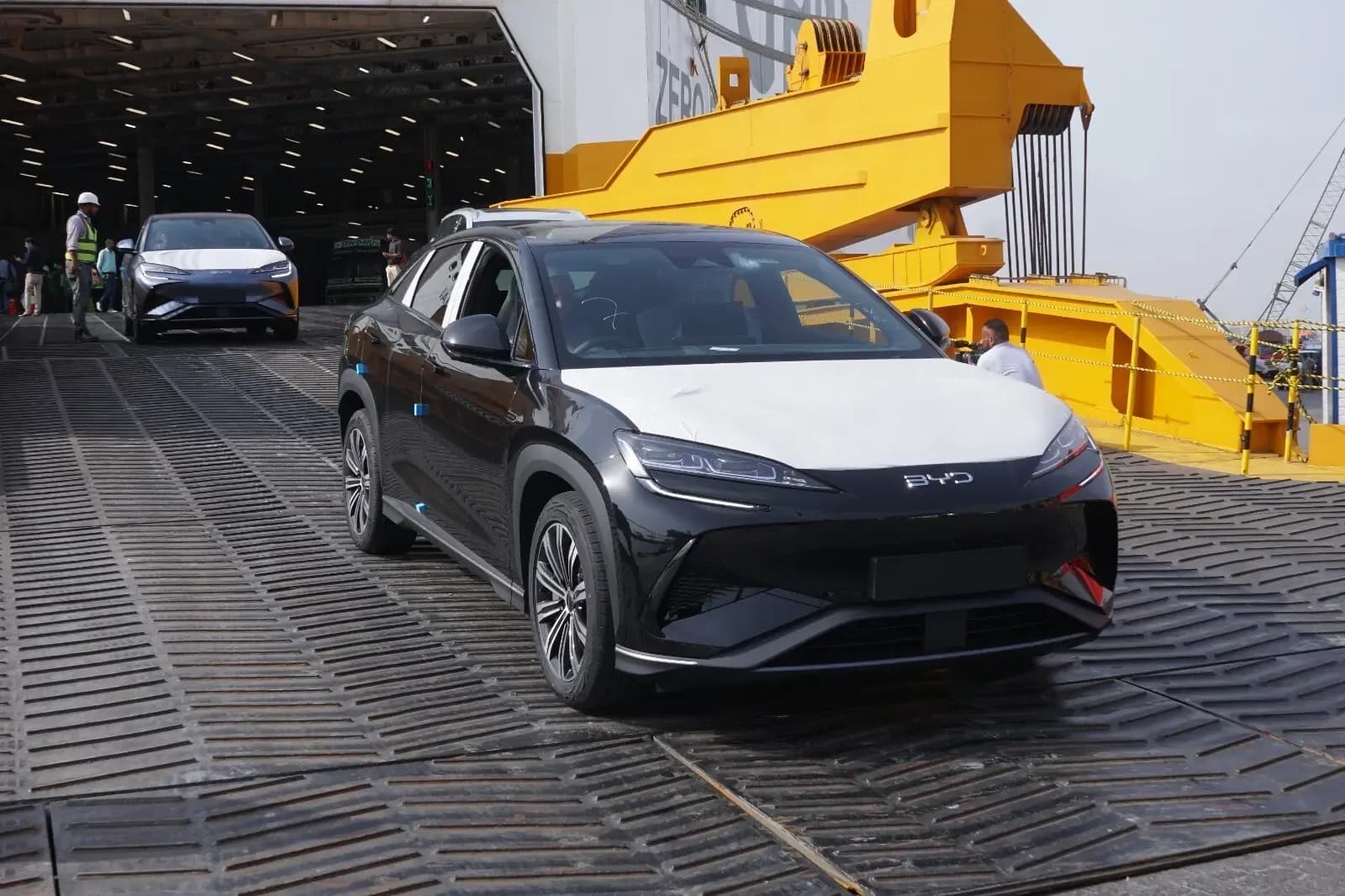
Pakistan’s New Energy Vehicle (NEV) sector reached a landmark milestone this week as Karachi Port welcomed its largest single shipment of electric vehicles in history. Over 2,000 BYD vehicles landed at the Karachi Gateway Terminal Limited (KGTML) aboard the cutting-edge roll-on/roll-off (RoRo) vessel M.V. Grande Shanghai.
Imported by Mega Motor Company (MMC)—the automotive subsidiary of Hub Power Company (HUBCO) partnering with global giant BYD—the shipment comes at a time when volatile domestic petrol prices and daily fuel tariff adjustments are pushing urban drivers toward electric mobility.

Zero-Emission Logistics: The M.V. Grande Shanghai Arrival
The delivery itself set a new benchmark for maritime and automotive logistics in Pakistan:
- Solar & Battery Powered Vessel: The M.V. Grande Shanghai is a specialized hybrid RoRo vessel equipped with 2,500 square meters of solar panels and a 5 MWh lithium-ion battery system. This allowed the ship to operate with zero local emissions while docked at Karachi Port.
- Rapid Discharge: Utilizing built-in internal ramps, all 2,000+ vehicles were driven off the deck without requiring heavy cranes, completing the entire discharge operation in a record 26 hours and 34 minutes.
EXPLORE BYD MODELS IN PAKISTAN
Compare specifications, battery range, and local pricing:
Market Dynamics: Why EV Appetite is Accelerating
EVs currently represent roughly 4% to 5% of Pakistan’s total auto market, up significantly from previous years. Several key drivers are accelerating this shift:
Fuel Volatility vs. Electricity Economics
With the government transitioning to frequent fuel price revisions amid global oil market shifts, the cost of running a traditional internal combustion engine (ICE) vehicle has become unpredictable. In contrast, home-charging an EV remains substantially cheaper on a per-kilometer basis.
Government NEV Policy 2025–2030 Targets
Under the national policy framework, Pakistan targets 30% of all new vehicle sales to be NEVs by 2030. Meeting this target is projected to save over 2 billion liters of imported fuel annually, cutting the national import bill by approximately $1 billion per year.

The Duty Dilemma: CBU Imports vs. Local Assembly
While this 2,000-unit shipment helps clear pre-booking backlogs for eager buyers, auto industry analysts point out a critical policy friction in the Finance Act 2026–27:
Vehicle / Component Category | Import Tariff Rate | Industry & Market Impact |
|---|---|---|
CBU Imports (<850cc) | 30% | Lower tariff barrier for fully built imported cars |
CKD Kits (Local Assembly) | 32% | Higher tax burden on assemblers importing assembly kits |
Localized Components | Up to 46% | Heaviest tax penalty on domestically sourced parts |
Industry Takeaway: Because importing a completed CBU vehicle is currently taxed lower than importing CKD kits or sourcing parts locally, the tariff structure inadvertently penalizes domestic manufacturing. Auto industry veterans are lobbying for an immediate adjustment to realign duties with the government's "Made in Pakistan" localized assembly goals.
What's Next: Local Plants & Fast-Charging Corridors
For buyers evaluating whether to make the switch to an electric or plug-in hybrid vehicle, two major infrastructure developments are underway:
- Local CKD Assembly (Late 2026): BYD and Mega Motor Company have achieved financial close on a dedicated vehicle assembly facility in Karachi. Local production is scheduled to begin by late 2026, which will lower lead times and stabilize vehicle prices.
- HUBCO Green Charging Network: To resolve public charging anxiety, HUBCO Green is rolling out DC fast-chargers along major intercity motorways (M-2, M-3, M-5) and urban commercial centers, supporting the broader adoption of long-range EVs and PHEVs.

PLANNING YOUR NEV TRANSITION?
Use our tools to map public charging stations, calculate daily fuel savings, and compare EV vs. Hybrid running costs.
Editorial Disclaimer: Vehicle specifications, pricing, and duty rates published on this directory are compiled from official manufacturer disclosures and government tariff schedules as of July 2026. Local showroom pricing, delivery timelines, and freight charges may vary by dealership.