Head to head
The cheapest variant of each, side by side: ex-factory price, range, charging and running costs in Pakistan. In short: Kia EV5 starts lower than Hyundai Ioniq 5, and Hyundai Ioniq 5 goes further on a full charge or tank. The standout figure in each row is highlighted.
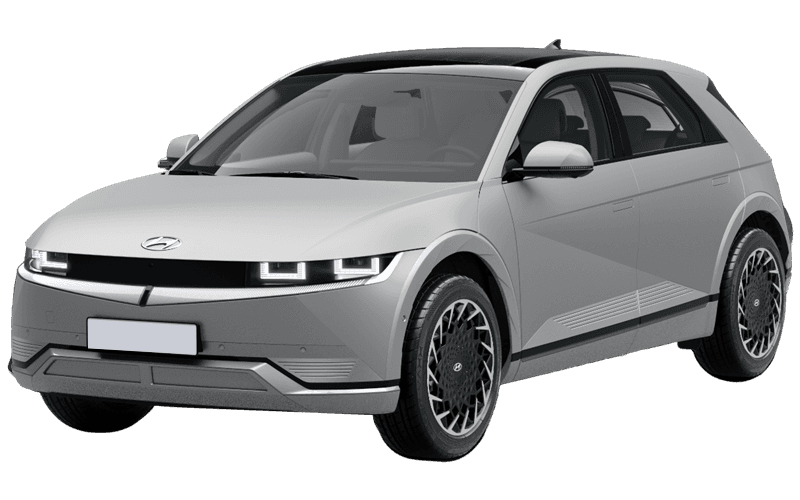 | 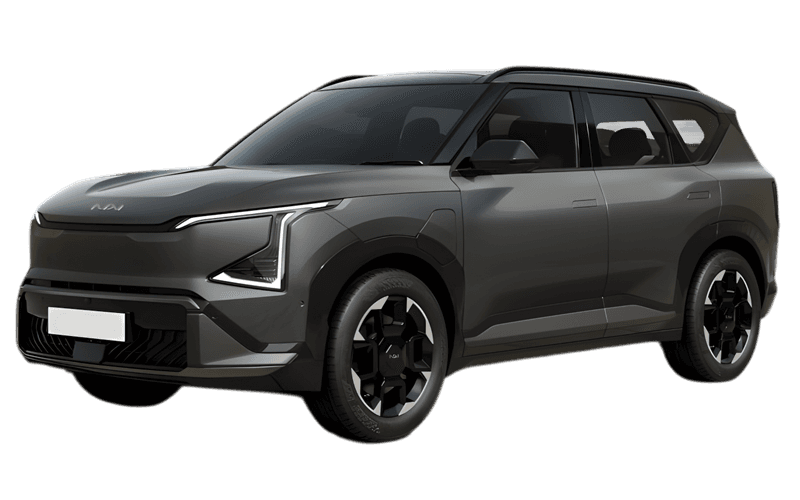 | |
|---|---|---|
Hyundai Ioniq 584 kWh · 2.25 Cr | Kia EV564.2 kWh · 1.85 Cr | |
| Overview | ||
| Price | 2.25 Cr | 1.85 Cr |
| Powertrain | EV | EV |
| Body type | SUV | SUV |
| Battery & charging | ||
| Battery· kWh | 84 | 64.2 |
| Electric range· km | 507 | 490 |
| Consumption· kWh/100km | 16.1 | 12.1 |
| Max AC charge· kW | 11 | 11 |
| Max DC charge· kW | 233 | 102 |
| DC 10–80%· min | 18 | 36 |
| Performance | ||
| Power· hp | – | 215 |
| Torque· Nm | 605 | 310 |
| 0–100 km/h· s | 5.1 | 8.5 |
| Top speed· km/h | 185 | 185 |
| Dimensions | ||
| Seats | 5 | 5 |
| Boot· L | – | 513 |
| Length· mm | 4,655 | 4,615 |
| Width· mm | 1,890 | 1,875 |
| Height· mm | 1,605 | 1,715 |
| Wheelbase· mm | 3,000 | 2,750 |
| Kerb weight· kg | – | 1,870 |
Want a different variant or a third car? Open this matchup in the full comparison tool, or read the full reviews: Hyundai Ioniq 5 and Kia EV5.